

November 13, 2026
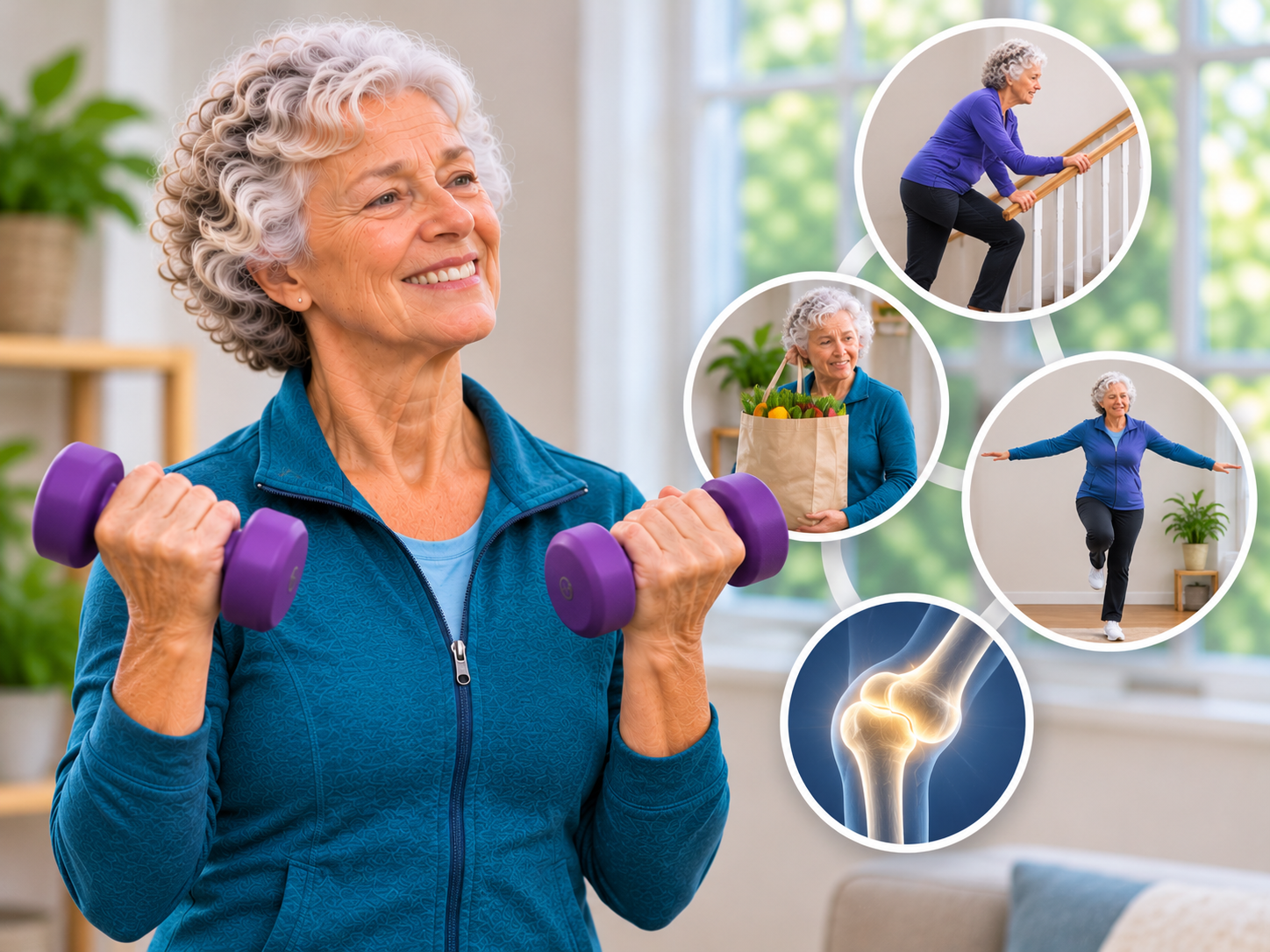
Short answer: Strength training for seniors supports the everyday movements a scale cannot measure: standing from a chair, carrying groceries, managing stairs. Research shows older adults can still build strength with resistance training, although results vary from person to person. An appropriate program starts from your current abilities, health and goals.
On this page
⚡ Quick Answer
- Body weight is useful health information, but it does not directly measure muscular strength or physical function.
- Two people who weigh the same can have very different levels of strength, balance and mobility.
- Resistance training can improve muscular strength in older adults and some measures of physical function.
- Training should match your current abilities, experience, health considerations and goals.
Does Your Weight Tell You How Strong You Are?
For many people, body weight is one of the first numbers they associate with health. As we get older, it does not tell the whole story.
It cannot show how easily you get out of a chair, whether carrying groceries feels manageable, or how comfortably you climb stairs, walk around your neighbourhood, garden, travel, or take part in the activities that matter to you. Body weight and physical capacity are different things.
HealthLink BC recommends muscle-strengthening activities as part of regular physical activity for older adults. So alongside asking, "What do I weigh?", another useful question is: "What do I want to keep being able to do?"
Weight is useful health information, and changes in body weight can have important health implications. But weight alone does not tell us how much force the muscles can produce or how someone performs everyday movements. Looking at strength, balance, mobility, and physical function adds a different and useful perspective.
What Is the Difference Between Body Weight and Muscular Strength?
Body weight measures how much a person weighs. Muscular strength refers to the ability of the muscles to produce force. Both relate to health, but they answer different questions.
Two people can weigh exactly the same and have very different levels of muscular strength. One may stand from a chair repeatedly, carry groceries, climb stairs, and walk comfortably for longer periods. Another, at the same weight, may find some of these activities more challenging.
This does not mean body weight should be ignored. Being underweight or living with obesity can have important health implications. Weight is one piece of information rather than a complete picture of physical health. Measures of strength and physical function provide information that body weight cannot.
Why Does Strength Matter as We Get Older?
We use muscular strength throughout the day, often without thinking about it:
- Getting up from a chair
- Standing from the toilet
- Carrying groceries
- Climbing stairs
- Getting in and out of a vehicle
- Picking something up from the floor
- Walking through a shopping centre
- Gardening
- Moving around the home
These activities require different combinations of strength, balance, coordination, mobility, and endurance. Lower-body strength in particular plays an important role in standing up and climbing stairs.
That is one reason strength training can be a valuable part of an active-aging routine. For most older adults, the goal is practical: build or maintain the physical capacity needed for everyday life.
Can Older Adults Still Build Strength?
Yes. Older adults can improve muscular strength through resistance training, although the amount of improvement varies from person to person.
A 2022 systematic review and meta-analysis examined 24 randomized controlled trials involving more than 3,600 community-dwelling older adults with mobility limitations. Resistance training improved lower-body strength. The review also found smaller improvements in usual walking speed and in the distance participants covered during a six-minute walking test, although not every measure of physical function improved.
A large 2025 review brought together 151 randomized controlled trials involving more than 6,000 adults aged 60 and older. It found improvements in muscular strength, and some resistance-training approaches also improved measures of physical function.
Two limits are worth knowing. Most of this research involved older adults living independently, so the results may not apply in the same way to people living with frailty or several health conditions. And in research on sarcopenia (age-related muscle loss), some of the measured gains were too small to make a noticeable difference in daily life.
The overall message is still encouraging: strength remains trainable later in life, and the body continues to respond to appropriately designed resistance exercise. How much any one person improves will vary.
Does Strength Training Improve Mobility and Independence?
Strength training can support some aspects of physical function, but it is important not to overstate what the research shows. Improving muscular strength does not automatically improve every aspect of mobility, and it does not guarantee that someone will remain independent.
Independence is influenced by many factors, including:
- Overall health
- Balance
- Mobility
- Cognition
- The home environment
- Social support
- Access to transportation and services
- Previous injuries
- Individual activity levels
Strength is one important piece of the picture. Balance, mobility, confidence, daily activity, and a person's surroundings matter too, which is why a well-rounded approach is more useful than focusing on a single measurement.
The evidence supports a practical conclusion: resistance training can improve muscular strength in older adults and may improve some measures of physical function. It cannot tell us exactly how much one individual will improve.
What If I Have Not Exercised in Years?
You do not need a long history of exercise to begin working on strength. Someone who has exercised consistently for decades may need a very different program from someone who has been inactive for several years.
A program may need to consider:
- Current strength and mobility
- Previous exercise experience
- Relevant health considerations
- Previous injuries
- Balance and movement confidence
- Current activity levels
- Personal goals
- The activities the person wants to continue doing
For one person, the right level of challenge might mean progressing through bodyweight movements. For another, it might involve resistance bands, weights, or other forms of resistance. The training should serve the person's goals.

How Can Strength Training Relate to Everyday Activities?
One of the most useful ways to think about strength training is to connect it with real life. Instead of asking only "How much weight can I lift?", consider "What do I want to be able to do more comfortably?"
For an older adult in Vancouver, that could mean managing neighbourhood hills, walking around Stanley Park, climbing stairs, shopping independently, gardening, travelling, or staying active in the community. For someone else, the goal may be getting up from a favourite chair with greater confidence.
These goals help guide the movements and resistance exercises included in a program.
Everyday goal: Getting up from a chair
Chair-based movements can be used to work on lower-body strength and practise a movement that occurs regularly throughout the day.
Everyday goal: Carrying groceries
Exercises that develop upper- and lower-body strength can support the physical demands of carrying and transporting everyday items.
Everyday goal: Managing stairs
Lower-body strengthening can be combined with balance and movement practice to make training more relevant to stairs.
Everyday goal: Staying active outdoors
Strength, balance, and mobility exercises can all contribute to the physical capacity needed for walking and community activities.
The specific exercises, resistance, repetitions, and progression should be appropriate for the individual.
Is Strength Training for Seniors Safe?
Strength training can be appropriate for many older adults, but no single program suits everyone. Someone managing significant physical limitations or several health considerations may need a more individualized approach.
Starting with the person's current abilities and goals is important. An individualized program can set an appropriate starting point and gradually adjust the challenge based on how the person responds.
For some older adults, exercising at home also makes participation easier. There is no requirement to start in a busy gym. A familiar home environment can be a comfortable place to begin, particularly for someone who finds travelling to a gym difficult or simply prefers exercising at home.
What About Seniors Who Live in Vancouver or the Lower Mainland?
Staying active looks different depending on where you live and what you enjoy. For older adults in Vancouver and the Lower Mainland, staying strong might support walking through the neighbourhood, managing stairs, shopping, gardening, visiting family, taking part in community activities, or continuing favourite hobbies.
North Vancouver and West Vancouver offer plenty of opportunities for walking and community life, but everyday environments there can include hills, stairs, uneven surfaces, and other physical demands.
A strength and mobility program can be built around the activities that are meaningful to the individual, focusing on lower-body strength, balance, mobility, functional movements, or a combination of these.
What Can an Individualized Senior Fitness Program Include?
An individualized program may combine several areas of exercise depending on the person's goals and current abilities.
| Training focus | What it can support |
|---|---|
| Strength training | Muscle strength and capacity for everyday movements |
| Balance exercises | Confidence and control during standing and movement |
| Mobility exercises | Comfortable movement through everyday ranges of motion |
| Functional movements | Practice related to daily activities |
| Progressive resistance | Gradually increasing an appropriate exercise challenge |
| Walking or activity practice | Maintaining participation in valued activities |
Not every person needs the same combination. Someone mainly interested in maintaining strength may have different priorities from someone who wants to feel more confident on stairs or return to regular activity after a period of inactivity.
Personal Trainer for Seniors in BC: Where Should You Start?
If you are looking for a personal trainer for seniors in BC, the first step is not choosing the hardest workout or the heaviest weights. Start with the person:
- What can they comfortably do today?
- What would they like to keep doing?
- What activities have become more difficult?
- What type of exercise environment feels comfortable?
- What kind of support would make it easier to stay consistent?
HomeStretch provides in-home kinesiology and personal training for older adults throughout Vancouver and the Lower Mainland, including North Vancouver and West Vancouver. Programs can incorporate strength, balance, and mobility based on an individual's current abilities, health considerations, previous injuries, and goals.
Look Beyond the Number on the Scale
Body weight remains useful health information. It simply cannot answer every question about physical capacity. Body weight tells us how much someone weighs. Strength and functional measures tell us something about what someone can physically do. Neither provides a complete picture of health on its own.
The research gives older adults good reason to be encouraged about one specific area: the capacity to improve muscular strength through resistance training remains. Some measures of physical function can improve too, although the size of those changes varies and not every outcome improves in every study.
So alongside "What do I weigh?", it may be worth asking "What do I want to keep being able to do?" That question shifts the focus toward strength, movement, confidence, and the activities that make everyday life meaningful.
If you or an older family member would like support building strength at home, HomeStretch can help you explore an individualized exercise program based on current abilities and personal goals.
Stay Strong. Stay Steady. Stay Independent.
Frequently Asked Questions About Strength Training for Seniors
Can seniors build muscle and strength as they age?
Yes. Older adults can improve muscular strength through resistance training. The amount of improvement varies with the individual, the program, their starting point, and other factors.
Does body weight show how strong someone is?
No. Body weight measures how much someone weighs, but it does not directly measure muscular strength or physical function. Two people with the same body weight can have very different levels of strength and mobility.
How often should older adults do strength training?
Canada's physical activity guidelines for adults 65 and older recommend muscle-strengthening activities using the major muscle groups at least twice a week. How those sessions look, and how quickly they progress, depends on your current abilities, health, and goals.
Can seniors exercise at home?
Yes. Home-based exercise can be an option for older adults who prefer a familiar environment or find travelling to a gym difficult. Programs can be adapted to the space, equipment, abilities, and goals of the individual.
What should older adults consider before starting strength training?
Consider your current strength and mobility, exercise experience, previous injuries, relevant health considerations, and personal goals. If you are unsure where to begin, individualized support can help you find an appropriate starting point.
Sources
- HealthLink BC, physical activity for older adults
- Canadian 24-Hour Movement Guidelines for Adults 65 Years and Older
- 2022 systematic review and meta-analysis: resistance training in community-dwelling older adults with mobility limitations
- Effects of Resistance Training Volume on Physical Function, Lean Body Mass and Lower-Body Muscle Hypertrophy and Strength in Older Adults: A Systematic Review and Network Meta-analysis of 151 Randomised Trials
Author Bio - Amirah, Kinesiologist, UBC Kinesiology graduate
Amirah is a HomeStretch kinesiologist serving Surrey and West Vancouver and a UBC kinesiology graduate. She helps older adults improve their strength, balance, mobility, and confidence through personalized exercise programs that combine strength training, balance work, mobility, and rehabilitation.
About HomeStretch Active Living: HomeStretch helps older adults stay active, confident, and independent through individualized exercise support. Founder Melissa Gunstone's work with aging adults grew from seeing the gap between completing a structured program and having the ongoing support needed to keep building strength, balance, and mobility at home. Today, HomeStretch provides in-home kinesiology and personal training for older adults across Vancouver and the Lower Mainland.
